
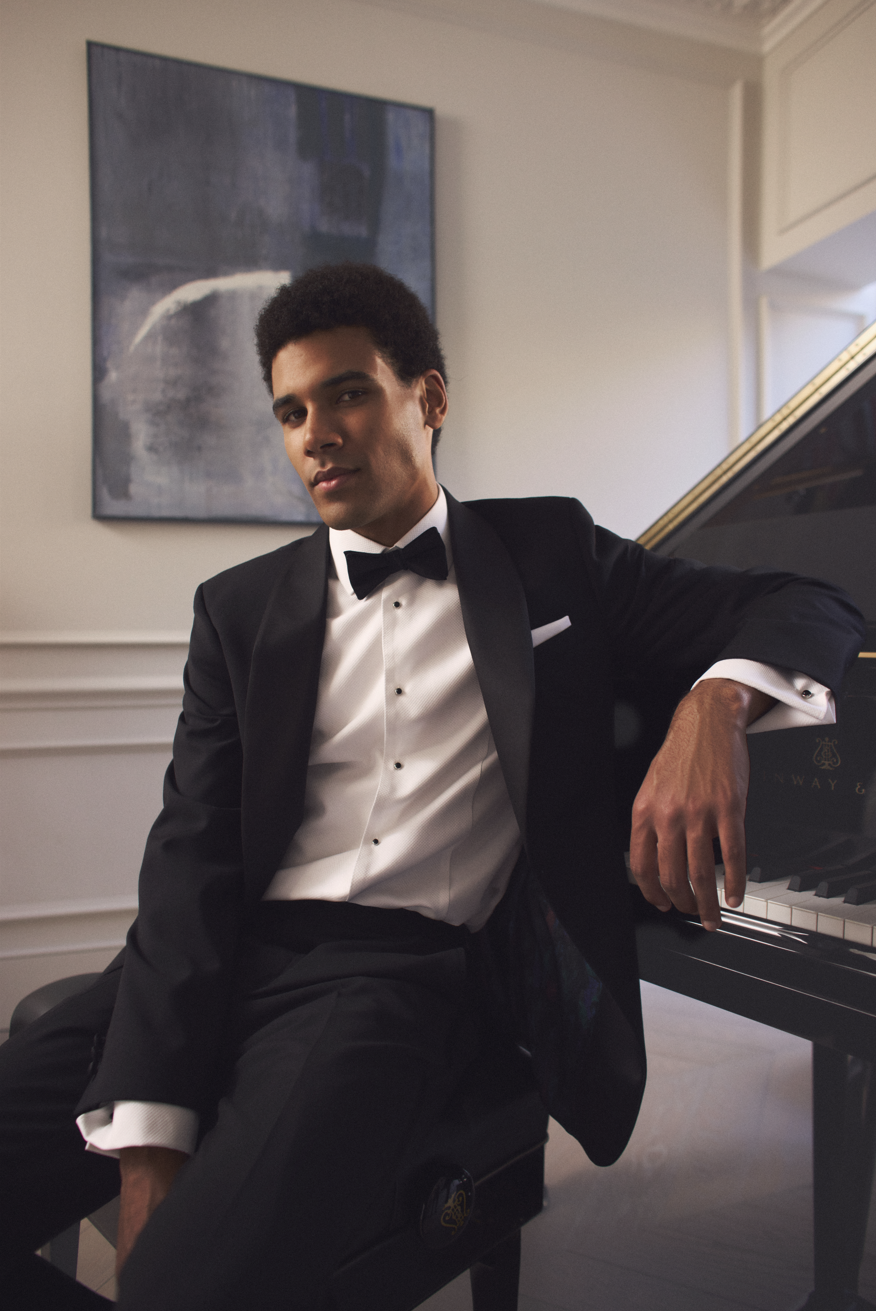
What to Wear to a Black Tie Wedding
1. Understanding the Black Tie Dress Code
A black tie wedding isn’t just a party, it’s an event steeped in tradition. When the invitation says Black Tie, that means one thing: formal evening wear is expected.
The essentials:
- A dinner suit (also known as a tuxedo), typically in black or midnight navy
- A formal white dress shirt
- A black bow tie
- Polished black shoes
Optional extras: waistcoat or cummerbund
Unlike cocktail or semi-formal dress codes, black tie leaves little room for interpretation. The aim is uniform elegance, with subtle personal flair through fabric, cut, or accessories.
See also: Black Tie Dress Code
2. The Black Tie Suit: Classic, Refined, Essential
The tuxedo is the centrepiece of any black tie outfit. It’s where fit, fabric, and detail make all the difference.
The Jacket
Colour: Traditional black is safest, but midnight navy often looks richer under evening light or a rich burgundy can work if you're feeling confident.
Lapels: Peak lapels are classic and formal; shawl lapels are smoother and slightly softer in appearance.
Fabric: Wool or wool-mohair blends drape beautifully and resist creasing. Avoid shiny synthetics.
Detailing: Satin or grosgrain lapel facing; single-button closure; jetted pockets.
The Trousers
Cut to match the jacket. Flat front, no belt loops, and a satin side stripe.
Hemmed to sit just above the shoe for a clean line.

3. The Shirt: Crisp, Structured, and Sophisticated
A black tie shirt is not just another white shirt. What to look for:
- Fabric: Cotton poplin or a textured marcella front (piqué) adds formal structure.
- Collar: A classic wing or spread collar suits bow ties best.
- Front: Fly-front or studded placket. Avoid visible buttons.
- Cuffs: Always double cuffs, worn with understated cufflinks.
- Keep it immaculate: crisp, pressed, and perfectly fitted.
4. The Bow Tie: Small Detail, Big Impact
The bow tie is the hallmark of black tie style. Preferably tied by hand.
- Colour: Traditional black silk is timeless.
- Material: Choose matte silk, grosgrain, or velvet depending on the season.
- Shape: Classic butterfly or diamond-point for a subtle touch of character.
If you’re new to tying a bow tie, practice before the big day!
TML Tip: Consider a velvet bow tie for added depth and texture.
5. Accessories & Finishing Touches
Black tie dressing is all about refinement through restraint. Each detail should complement the overall look. Nothing more, nothing less.
- Pocket square: White linen or silk. Folded flat for clean elegance.
- Cufflinks: Silver or onyx; avoid novelty designs.
- Waistcoat or cummerbund: Optional, but both enhance the silhouette. The cummerbund should always face up (pleats towards the waist).
- Watch: Slim dress watch with black leather strap. Metal bracelets or smartwatches break the formality.
- Socks: Black silk or fine cotton. Never visible when standing.
- Shoes: Polished black Oxfords or patent leather evening shoes. Ensure they’re freshly shined and in perfect condition.

6. Common Mistakes (and How to Avoid Them)
- Wearing a normal suit: A black suit with a regular tie isn’t black tie. It lacks the distinctive satin details that define the dress code.
- Skipping the bow tie: A necktie undermines formality. Always stick with a bow.
- Wearing flashy accessories: Keep everything understated; simplicity is elegance.
- Poor fit: Black tie magnifies proportion errors. Tailoring is everything.
- Mismatched colours: Midnight blue and black can clash if fabrics differ in sheen. Be consistent.
7. FAQs: Black Tie Wedding Style Essentials
Q1: Can I wear a tuxedo to a non-evening wedding?
Only if the invitation specifies black tie. Daytime weddings traditionally call for morning dress, though this is now rare outside very formal settings.
Q2: Can I wear a coloured dinner jacket?
Yes, but proceed carefully. Velvet in deep navy, green, and burgundy can work for festive or winter settings, provided the trousers and bow tie remain black.
Q3: Do I need a waistcoat or cummerbund?
Not essential, but both add refinement and structure. Particularly if you’ll remove your jacket.
Q4: What’s the correct shirt collar?
A classic wing or spread collar is best. Button-down collars are never appropriate.
8. In Summary
A black tie wedding is the perfect occasion to embrace formality with restraint, polish, and timeless taste. When done right, it’s less about standing out and more about looking impeccably appropriate.
From the satin lapel of a dinner jacket to the subtle knot of a hand-tied bow tie, true black tie style is a study in precision. And that’s where T.M.Lewin has always excelled.
While trends shift and dress codes evolve, the tuxedo remains a man’s most dependable expression of elegance.
Explore the Collection: Eveningwear | Dress Shirts | Accessories
Read more: What to Wear to a Wedding